

Post-COVID Lung Recovery: Does Home Oxygen Actually Help?

If you or a family member is still breathless months after a COVID-19 infection, you have probably searched for an oxygen therapy at home guide to understand whether a concentrator can genuinely speed up lung recovery. The short answer is yes, in the right circumstances — but only when it is prescribed after proper testing and used correctly, not as a blanket “just in case” purchase.
Post-COVID lung damage, sometimes called post-COVID fibrosis or long-COVID hypoxaemia, can leave scarring in the alveoli that reduces how efficiently oxygen crosses into the bloodstream. In India, pulmonologists at AIIMS, PGI Chandigarh and several private hospitals have reported that a meaningful minority of moderate-to-severe COVID survivors show low oxygen saturation (SpO2 below 94%) on exertion for weeks or even months after the acute infection clears. This is where a structured oxygen therapy at home guide becomes genuinely useful for families managing recovery outside the hospital.
What Post-COVID Lung Recovery Actually Looks Like
Recovery from COVID-related lung injury is rarely linear. Most patients with mild-to-moderate disease regain near-normal lung function within 4 to 12 weeks. Patients who needed hospital oxygen or ICU care, however, can take 6 months to 2 years to see full radiological improvement, and some develop permanent fibrotic changes visible on a HRCT chest scan.
- Persistent breathlessness on stairs or brisk walking
- SpO2 dropping below 94% during a 6-minute walk test
- Fatigue disproportionate to physical effort
- A dry cough that lingers for weeks
Does Home Oxygen Therapy Actually Help Recovery?
Supplemental oxygen does not repair scarred lung tissue directly, but it does two important things: it prevents the low-oxygen stress that slows tissue healing, and it allows patients to safely do the breathing exercises and light physiotherapy that genuinely rebuild lung capacity. This is the core principle behind any credible oxygen therapy at home guide — oxygen buys the body room to heal, it is not a cure by itself.
Clinical follow-up studies from Indian and international pulmonology units generally show that patients using prescribed home oxygen during pulmonary rehabilitation recover exercise tolerance faster than those who push through hypoxaemia untreated. The World Health Organization’s clinical management guidance for COVID-19 also emphasises oxygen monitoring as a central part of post-acute care.
Who Actually Needs Home Oxygen After COVID
Not every long-COVID patient needs a concentrator. A pulmonologist will typically prescribe home oxygen only when:
- Resting SpO2 is consistently below 94% on room air
- SpO2 drops more than 4 points during light exertion
- HRCT shows significant fibrosis or ground-glass changes
- The patient has co-existing COPD, heart disease, or obesity that worsens hypoxaemia
If your numbers are borderline, ask your doctor for a formal 6-minute walk test with a pulse oximeter before buying any device — this avoids both under-treatment and unnecessary expense.
Choosing the Right Oxygen Concentrator for Recovery at Home
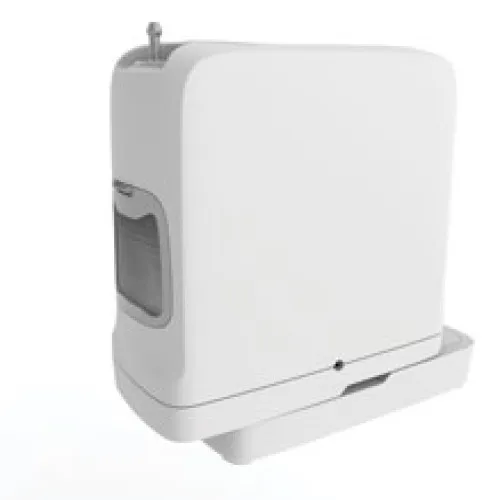
Most post-COVID patients on home oxygen need low-to-moderate flow rates, typically 1–5 litres per minute (LPM), making a 5 LPM continuous-flow concentrator the most common choice for Indian households. Below is a quick comparison to help you plan the budget.
| Concentrator Type | Typical Flow | Best For | Approx. Price (₹, 2026) |
|---|---|---|---|
| 5 LPM Continuous Flow | 1–5 LPM | Mild-moderate post-COVID hypoxaemia | ₹28,000 – ₹42,000 |
| 10 LPM Continuous Flow | 1–10 LPM | Severe fibrosis, dual-patient homes | ₹55,000 – ₹85,000 |
| Portable Pulse-Dose Unit | Pulse 1–3 settings | Mobile patients, travel | ₹65,000 – ₹1,20,000 |
Setting Up a Safe Home Oxygen Routine
A good oxygen therapy at home guide should cover daily monitoring, not just equipment. Keep a pulse oximeter beside the concentrator and log readings morning and evening. Clean or replace the intake filter weekly, place the machine at least 30cm from walls for airflow, and never use it near open flames or smoking.
- Check SpO2 before, during and after physiotherapy sessions
- Keep flow rate exactly as prescribed — do not self-adjust upward
- Service the concentrator every 3–6 months by an authorised technician
- Keep a backup oxygen cylinder for power outages if you live in a low-inverter-backup area
Pulmonary Rehabilitation Alongside Oxygen
Breathing exercises like diaphragmatic breathing, pursed-lip breathing, and graded walking programmes are what actually rebuild lung capacity over months. Oxygen simply removes the danger of doing these exercises while hypoxic. Many Indian hospitals now run tele-rehab programmes so patients can do guided sessions from home while their SpO2 is tracked.
You can browse our full oxygen concentrator range to compare models suited to post-COVID recovery, and read more recovery stories and care tips on the Oxygen4India blog.
When to Call Your Doctor Immediately
Stop home oxygen use and seek medical attention if SpO2 falls below 90% despite the prescribed flow, if breathlessness worsens suddenly, or if you notice chest pain, bluish lips, or confusion. These can indicate a new complication that needs hospital-level care, not just more oxygen at home.
Frequently Asked Questions
How long do post-COVID patients typically need home oxygen?
It varies widely — mild cases may need it for 2–4 weeks, while patients with significant fibrosis may need it for several months, with flow requirements reassessed by a pulmonologist every 4–6 weeks.
Can I start home oxygen therapy without a doctor’s prescription?
You should not. Oxygen is a medical treatment, and incorrect flow rates can mask worsening symptoms or, in rare cases with underlying COPD, cause CO2 retention. Always get an SpO2 assessment and prescription first.
Will using an oxygen concentrator repair lung scarring?
No. Oxygen supports healing conditions but does not reverse fibrosis directly. Recovery of lung tissue comes from time, rehabilitation exercises, and in some cases medication — oxygen simply prevents further hypoxic stress during that process.
What flow rate concentrator is right for post-COVID recovery?
Most patients start at 1–3 LPM and are reassessed monthly. A 5 LPM concentrator covers this range comfortably with room to increase if advised, which is why it’s the most commonly prescribed unit for home recovery.
Disclaimer: This article is for general informational purposes only and does not replace professional medical advice. Please consult a qualified pulmonologist or physician before starting or adjusting any home oxygen therapy.
