

COPD Explained: Stages, Symptoms and Oxygen Requirements

Choosing the right oxygen concentrator for COPD patients starts with understanding the disease itself — its stages, how symptoms progress, and exactly when supplemental oxygen becomes medically necessary. Chronic Obstructive Pulmonary Disease (COPD) affects an estimated 55 million Indians, driven by high rates of smoking, biomass cooking fuel exposure, and urban air pollution. This comprehensive guide walks through every GOLD stage of COPD, the oxygen requirements at each stage, and how to select and use a concentrator safely at home.
What Is COPD? Understanding the Basics
COPD is a progressive, largely irreversible lung condition that includes two overlapping conditions: chronic bronchitis (inflammation and mucus buildup in airways) and emphysema (destruction of the tiny air sacs, or alveoli, that transfer oxygen into the blood). Both reduce the lungs’ ability to move air in and out and to absorb oxygen efficiently, which is why many patients eventually need supplemental oxygen delivered through devices such as an oxygen concentrator for COPD patients at home.
The most common cause in India remains tobacco smoking (cigarettes and bidis), but a significant proportion of cases — especially in rural and semi-urban women — stem from years of exposure to smoke from chulhas (biomass cookstoves) in poorly ventilated kitchens.
The Four GOLD Stages of COPD
Pulmonologists classify COPD severity using the GOLD (Global Initiative for Chronic Obstructive Lung Disease) system, based on spirometry results (FEV1 — forced expiratory volume in one second) and symptom burden.
Stage 1: Mild COPD
FEV1 ≥ 80% of predicted value. Patients often have a mild chronic cough, occasional breathlessness on exertion, and may not even realise they have COPD. Oxygen therapy is rarely needed at this stage; the focus is on quitting smoking and bronchodilator inhalers.
Stage 2: Moderate COPD
FEV1 between 50–79% of predicted. Breathlessness becomes noticeable during moderate activity like climbing stairs or brisk walking. Occasional flare-ups (exacerbations) may occur. Oxygen is typically not required continuously but may be prescribed for exertion or during acute flare-ups.
Stage 3: Severe COPD
FEV1 between 30–49% of predicted. Breathlessness occurs even with mild activity such as bathing or dressing. Exacerbations become more frequent and can require hospitalisation. This is often when doctors first prescribe a home oxygen concentrator for COPD patients, particularly for use during sleep, exertion, or if blood oxygen (SpO2) consistently drops below 90%.
Stage 4: Very Severe COPD (End-Stage)
FEV1 below 30% of predicted, or below 50% with chronic respiratory failure signs. Patients frequently need continuous long-term oxygen therapy (LTOT) — often 15+ hours a day — along with close pulmonology follow-up. Quality of life and survival both improve significantly with correctly managed LTOT at this stage.
Symptoms That Signal It’s Time to Discuss Oxygen Therapy
- Resting SpO2 consistently at or below 88% on a pulse oximeter
- Blue-tinge lips or fingertips (cyanosis)
- Severe breathlessness even at rest or with minimal movement
- Confusion, drowsiness, or morning headaches (signs of carbon dioxide retention)
- Frequent hospitalisations for COPD flare-ups
- Swelling in ankles/legs (a sign of right heart strain from chronic low oxygen)
A formal diagnosis for long-term oxygen therapy typically requires an Arterial Blood Gas (ABG) test or overnight oximetry, ordered by a pulmonologist — never self-prescribe oxygen therapy based on symptoms alone.
How an Oxygen Concentrator Helps COPD Patients
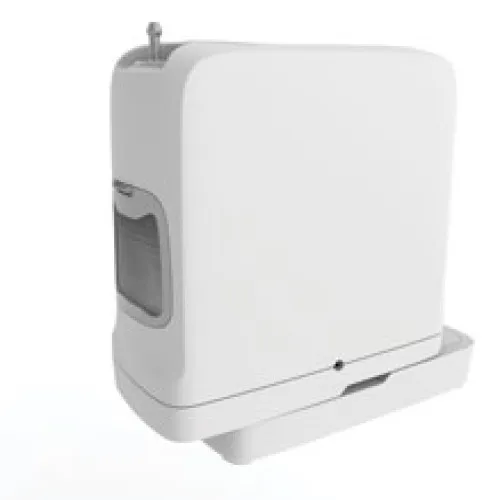
Unlike oxygen cylinders that need periodic refilling, a concentrator continuously draws in room air, removes nitrogen through a molecular sieve process, and delivers 90–96% pure oxygen on demand — making it the most practical, cost-effective option for long-term home use. For COPD specifically, concentrators help by:
- Reducing the workload on the heart and lungs by maintaining stable SpO2 levels
- Preventing pulmonary hypertension and cor pulmonale (right-sided heart failure) linked to chronic hypoxia
- Improving sleep quality, appetite, and daily energy levels
- Reducing frequency of hospital admissions when used as prescribed
Choosing the Right Concentrator: 5L vs 10L
| Feature | 5L Concentrator | 10L Concentrator |
|---|---|---|
| Ideal for | Mild to moderate COPD, flow needs up to 5 LPM | Severe/very severe COPD, ICU-like or high-flow needs |
| Typical patient profile | GOLD Stage 2–3 | GOLD Stage 3–4, dual-patient homes, hospital step-down care |
| Noise level | Lower (40–46 dB) | Slightly higher (48–55 dB) |
| Price range (India, 2026) | ₹28,000 – ₹55,000 | ₹55,000 – ₹95,000 |
| Power consumption | 350–450 W | 550–700 W |
| Portability | Moderate (10–15 kg) | Low, mostly stationary (18–25 kg) |
Daily Usage Guidelines for COPD Patients
- Always use the exact flow rate (LPM) prescribed by your pulmonologist — do not adjust it based on how you “feel,” since over-oxygenation can suppress the breathing drive in advanced COPD patients.
- Monitor SpO2 with a pulse oximeter at least twice daily and log the readings.
- Keep the concentrator’s intake filter clean weekly; a blocked filter reduces oxygen purity precisely when a COPD patient needs it most.
- Use a humidifier bottle if flow rate exceeds 2 LPM or usage is continuous, to prevent nasal/throat dryness.
- Keep a backup oxygen cylinder at home for power cuts, since concentrators stop producing oxygen without electricity.
- Schedule annual professional servicing to check compressor health and sieve bed performance.
Selecting the right oxygen concentrator for COPD patients is only half the equation — consistent, correctly-flowed daily use combined with medication, pulmonary rehabilitation, and smoking cessation is what actually slows disease progression and improves survival. Browse our full range of 5L and 10L oxygen concentrators suited to different COPD stages and budgets.
Cost of Long-Term Oxygen Therapy in India (2026)
| Item | Approx. Cost (₹) |
|---|---|
| 5L concentrator (purchase) | ₹28,000 – ₹55,000 |
| 10L concentrator (purchase) | ₹55,000 – ₹95,000 |
| Monthly rental (5L) | ₹2,500 – ₹4,500/month |
| Monthly rental (10L) | ₹4,500 – ₹7,500/month |
| Electricity cost (5L, 12 hrs/day) | ₹350 – ₹550/month |
| Annual maintenance contract | ₹2,500 – ₹6,000/year |
| Backup cylinder refill (Type B/D) | ₹200 – ₹500 per refill |
When to Choose Rental Over Purchase
For patients in earlier GOLD stages who may only need oxygen during flare-ups or short recovery periods, renting is usually more economical. For Stage 3–4 patients on continuous long-term oxygen therapy for years, purchasing a concentrator typically pays for itself within 12–18 months compared to ongoing rental costs.
For authoritative clinical background on COPD staging and management, see the Mayo Clinic’s overview of COPD. For more India-specific home oxygen therapy guides, visit the Oxygen4India blog.
Frequently Asked Questions
At what SpO2 level should a COPD patient start using an oxygen concentrator?
Most pulmonologists prescribe long-term oxygen therapy when resting SpO2 is consistently at or below 88%, confirmed through an arterial blood gas test or overnight oximetry. Never start home oxygen therapy without a doctor’s prescription and specified flow rate.
Can too much oxygen be harmful for a COPD patient?
Yes. In advanced COPD, some patients rely on mildly low oxygen levels to trigger their breathing drive. Excessive oxygen flow beyond the prescribed rate can suppress this drive and lead to dangerous carbon dioxide build-up (hypercapnia). Always follow the exact prescribed LPM.
Is a 5L concentrator enough for severe COPD, or is 10L always needed?
It depends on the prescribed flow rate, not the disease stage alone. Many severe COPD patients manage well on a 5L machine if their prescribed flow is under 5 LPM; a 10L unit is generally needed only when flow requirements exceed 5 LPM or for dual-patient/high-demand situations.
How many hours a day should a COPD patient use the oxygen concentrator?
This is entirely individualised by your pulmonologist based on ABG/oximetry results — ranging from a few hours during exertion and sleep in moderate cases to 15+ hours daily (near-continuous) in very severe, GOLD Stage 4 disease.
Disclaimer: This article is for general informational purposes only and does not constitute medical advice. COPD staging, oxygen prescriptions, and flow rates must always be determined by a qualified pulmonologist based on individual clinical assessment.
