

CPAP Pressure Settings: What Your Prescription Actually Means

If you have just been handed a sleep study report, you may be confused about numbers like “10 cmH2O” and wondering about the cpap vs bipap difference before you decide which machine to buy. This guide breaks down exactly what your CPAP pressure prescription means, how it differs from a BiPAP prescription, and how to read your titration report like a professional so you can shop with confidence.
What Is a CPAP Pressure Setting?
CPAP stands for Continuous Positive Airway Pressure. When your doctor prescribes “CPAP at 10 cmH2O,” it means the machine delivers one constant pressure — both when you breathe in and when you breathe out — to keep your throat’s soft tissue from collapsing during sleep. This single number comes from an overnight sleep study called titration, where a technician gradually raises pressure until your apneas and snoring stop.
Typical CPAP prescriptions range from 4 cmH2O (very mild cases) to 20 cmH2O (severe obstructive sleep apnea with a higher BMI). Most adults in India are prescribed somewhere between 8 and 14 cmH2O. This number is not arbitrary — it is calculated specifically for your airway anatomy, weight, and sleep position, so never borrow a friend’s machine setting.
CPAP vs BiPAP Difference: The Core Distinction
The most important cpap vs bipap difference is that CPAP delivers a single fixed pressure throughout the breathing cycle, while BiPAP (Bilevel Positive Airway Pressure) delivers two separate pressures — a higher one (IPAP) when you inhale and a lower one (EPAP) when you exhale. This dual-pressure design makes exhaling noticeably easier and more natural.
Doctors usually start with CPAP for straightforward obstructive sleep apnea because it is simpler and more affordable. BiPAP is reserved for patients who cannot tolerate high single-pressure CPAP, or who have additional conditions such as COPD, obesity hypoventilation syndrome, neuromuscular disease, or central sleep apnea where the body needs help both breathing in and pushing air out.
| Feature | CPAP | BiPAP |
|---|---|---|
| Pressure delivery | Single fixed pressure | Two pressures — IPAP (inhale) and EPAP (exhale) |
| Best for | Straightforward OSA | COPD, high-pressure intolerance, neuromuscular disease |
| Comfort with exhaling | Can feel harder at high pressures | Easier, lower exhale resistance |
| Typical price (India, 2026) | ₹28,000–₹75,000 | ₹55,000–₹1,50,000 |
| Complexity of settings | One number to configure | Two to four numbers plus backup rate |
Reading Your Prescription: What Each Number Means
A typical CPAP prescription looks like: “CPAP, 10 cmH2O, with humidifier.” A BiPAP prescription is more detailed: “BiPAP, IPAP 16 / EPAP 8 cmH2O, backup rate 12.” Here is what each term means in practice.
- cmH2O — centimetres of water pressure, the unit used to measure air pressure delivered to your airway.
- IPAP — Inspiratory Positive Airway Pressure, the higher pressure delivered while you inhale, which helps push air into the lungs.
- EPAP — Expiratory Positive Airway Pressure, the lower pressure during exhale, which still keeps the airway propped open but is easier to breathe against.
- Pressure support — the difference between IPAP and EPAP; a bigger gap means more assistance with breathing effort.
- Backup rate — a minimum number of breaths per minute the machine will trigger if you do not breathe on your own, important for central sleep apnea or neuromuscular weakness.
Fixed vs Auto-Adjusting Machines
Both CPAP and BiPAP come in fixed-pressure and auto-adjusting (APAP/AutoBiPAP) versions. A fixed machine delivers exactly the number your doctor prescribed, every night, regardless of body position or congestion. An auto-adjusting machine continuously senses airflow resistance and raises or lowers pressure within a prescribed range in real time — useful if your pressure needs vary with sleep position, alcohol intake, or nasal congestion.
In India, many patients start with a fixed-pressure machine because it is more affordable, then upgrade to an auto model once they understand their therapy needs better. Auto machines typically cost ₹10,000–₹20,000 more than fixed equivalents.
Why Getting the Setting Right Matters
A pressure that is too low will not fully open your airway, so apneas and snoring continue and you wake up unrefreshed. A pressure that is too high can cause mask leaks, aerophagia (swallowed air causing bloating), or make it hard to exhale comfortably, leading patients to abandon therapy altogether. This is why home titration or an in-lab re-titration study is recommended if your symptoms do not improve after 3-4 weeks of consistent use.
| Symptom after weeks of use | Possible cause | Action |
|---|---|---|
| Still snoring or waking gasping | Pressure too low | Request re-titration or check machine’s data card |
| Hard to exhale, feels suffocating | Pressure too high for CPAP | Ask doctor about switching to BiPAP |
| Bloating, gas after waking | Aerophagia from high pressure | Try chin strap, discuss lower pressure with doctor |
| Dry mouth or nose | Insufficient humidification | Increase humidifier level, check mask seal |
When Doctors Move Patients from CPAP to BiPAP
Not everyone who starts on CPAP stays on it. Common reasons for switching include: patients needing pressures above 15-18 cmH2O who find exhaling uncomfortable, patients with COPD who need extra support pushing carbon dioxide out of the lungs, obesity hypoventilation syndrome where breathing effort is chronically reduced, and central or complex sleep apnea where the brain’s breathing signal itself is irregular. If your pulmonologist mentions any of these conditions during your consultation, expect a BiPAP recommendation rather than CPAP.
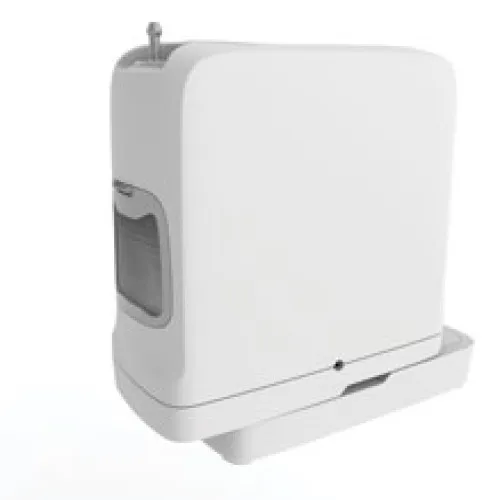
For patients who also need supplemental oxygen alongside pressure therapy, pairing the device with a home oxygen concentrator is common practice under medical supervision.
Cost Considerations in India (2026)
Budget matters when choosing between CPAP and BiPAP. Fixed CPAP machines start around ₹28,000, while auto CPAP ranges ₹45,000-₹75,000. BiPAP machines, given their dual-pressure motor and more complex electronics, start around ₹55,000 for fixed models and can reach ₹1,50,000 for advanced ST (spontaneous/timed) models with backup rate features used in respiratory failure cases. Masks, filters, and tubing are additional recurring costs of roughly ₹3,000-₹10,000 per year for replacements.
Read more on our blog for detailed device comparisons and buying guides tailored to Indian patients.
For general reference on sleep-related breathing disorders and their management, the NHS provides accessible patient information: nhs.uk.
Frequently Asked Questions
What is the main cpap vs bipap difference for a first-time buyer?
CPAP delivers one constant pressure throughout breathing, while BiPAP delivers two pressures — higher on inhale, lower on exhale — making BiPAP more comfortable for patients who need higher overall pressure or have additional lung conditions like COPD.
Can I switch from CPAP to BiPAP myself?
No, switching machines requires a new prescription based on either a re-titration sleep study or your doctor’s clinical judgment. Using the wrong device or pressure setting can be ineffective or uncomfortable.
Why does my CPAP prescription only have one number while my friend’s BiPAP has two?
CPAP uses a single pressure value because it delivers the same pressure on inhale and exhale. BiPAP has two numbers, IPAP and EPAP, because the machine intelligently varies pressure between breathing in and out.
Is BiPAP always more expensive than CPAP in India?
Generally yes — BiPAP machines start around ₹55,000 compared to ₹28,000 for basic CPAP, because of their more advanced dual-pressure and backup-rate electronics.
Disclaimer: This article is for informational purposes only and is not medical advice. Always consult your pulmonologist or sleep specialist before starting or changing pressure therapy.
