

Oxygen Concentrator Power Consumption and Inverter Backup Guide

Before buying a home oxygen device, most Indian families ask the same practical question: what is the actual oxygen concentrator power consumption, and will my inverter or generator keep it running during a power cut? This matters because unlike a fan or LED bulb, a concentrator is a continuous medical-grade motor load that cannot simply switch off during an outage if the patient needs oxygen round the clock.
Typical Oxygen Concentrator Power Consumption by Size
Power draw scales roughly with flow capacity and compressor size. Here is what Indian households can expect from commonly sold models in 2026.
| Concentrator Type | Power Draw | Daily Units (24 hrs) | Approx. Monthly Cost (₹8/unit) |
|---|---|---|---|
| 5 LPM Continuous Flow | 350–420 watts | ~8.5–10 units | ₹2,040 – ₹2,400 |
| 10 LPM Continuous Flow | 550–650 watts | ~13–16 units | ₹3,120 – ₹3,840 |
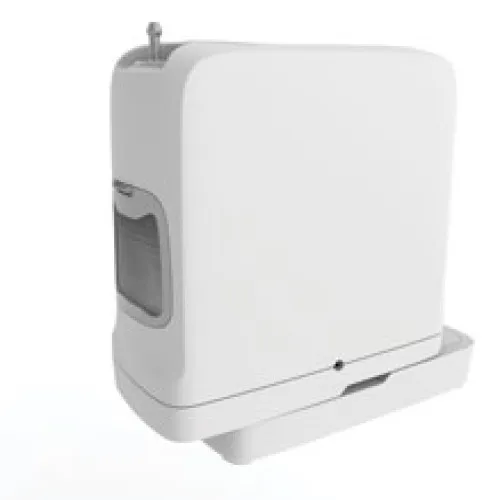
| Portable Pulse-Dose Unit | 60–150 watts | ~1.5–3.5 units | ₹360 – ₹840 |
These figures are averages compiled from manufacturer specification sheets; always check the wattage rating printed on your specific unit’s nameplate, since 5 LPM oxygen concentrator power consumption can vary by ±15% between brands depending on compressor efficiency and sieve-bed design.
Why Power Consumption Matters More Than You Think
A concentrator prescribed for continuous use runs 24×7, unlike most home appliances. Over a month this adds up to real electricity cost, and more importantly, real inverter/battery load during outages. Underestimating oxygen concentrator power consumption is one of the most common reasons families find their inverter backup fails exactly when it’s needed most — during a power cut at night.
Sizing an Inverter for Your Oxygen Concentrator
To size a backup correctly, you need three numbers: the concentrator’s running watts, its starting/surge watts (usually 1.5–2x running watts for a second or two at motor start), and how many hours of backup you want.
- Check the nameplate wattage (e.g. 400W for a typical 5 LPM unit)
- Add 20% headroom for surge current at startup: 400W × 1.2 = 480VA
- Multiply by desired backup hours to size the battery bank (e.g. 480W × 4 hrs = 1920Wh)
- Divide battery Wh by battery voltage to get required Ah (1920Wh ÷ 12V = 160Ah)
Inverter and Battery Recommendations for Common Models
| Concentrator | Min Inverter Rating | Recommended Battery (for 4 hrs backup) | Approx. Cost (₹, 2026) |
|---|---|---|---|
| 5 LPM (400W) | 600–700 VA pure sine wave | 1 x 150Ah tubular battery | ₹14,000 – ₹20,000 |
| 10 LPM (600W) | 900–1000 VA pure sine wave | 1 x 200Ah tubular battery | ₹18,000 – ₹26,000 |
Always choose a pure sine wave inverter, not a square-wave/modified-sine unit. Concentrator compressors and oxygen sensors are sensitive electronics, and a poor-quality waveform can cause the motor to run hot, trip the internal safety cutoff, or shorten the compressor’s lifespan.
Practical Tips to Reduce Running Cost
- Use the lowest flow rate your doctor has prescribed — do not run at a higher LPM “just in case”
- Keep the intake filter clean; a clogged filter forces the compressor to work harder and draw more power
- Place the unit in a well-ventilated spot — heat buildup increases power draw over time
- Service the concentrator every 3–6 months so the sieve beds and compressor stay efficient
Generator vs Inverter Battery Backup
For homes with frequent, long outages (rural areas, hilly regions), a small petrol/diesel generator (1KVA+) can be more practical than scaling up battery banks, though it requires manual starting and fuel storage. For short, frequent cuts common in Indian cities, a pure sine wave inverter with a tubular battery is quieter, automatic, and sufficient for most 5 LPM and 10 LPM setups. You can explore our full range of oxygen concentrators with published wattage specs, and read more setup guides on the Oxygen4India blog.
What Happens If Power Runs Out With No Backup?
If a concentrator stops due to a power cut, oxygen delivery stops immediately — there is no residual reserve inside the machine. Patients on prescribed oxygen should always have a backup cylinder at home (typically a 10-litre or 46.7-litre jumbo cylinder) as a fail-safe, regardless of inverter backup, per guidance echoed by respiratory care bodies including the NHS home oxygen treatment guidelines.
Frequently Asked Questions
What is the average power consumption of a 5 LPM oxygen concentrator?
Most 5 LPM continuous-flow concentrators draw between 350 and 420 watts during normal operation, translating to roughly 8.5–10 units of electricity per day if run continuously.
Can I run an oxygen concentrator on a UPS instead of an inverter?
A standard computer UPS is not suitable — it’s designed for brief backup of low-power electronics, not continuous medical motor loads. You need a dedicated pure sine wave inverter with an adequately sized deep-cycle or tubular battery.
Does higher LPM always mean higher power consumption?
Generally yes — a 10 LPM concentrator’s larger compressor draws roughly 40–60% more power than a 5 LPM unit, so always size your backup based on the specific model’s rated wattage, not just the LPM number.
How can I reduce my oxygen concentrator’s electricity bill?
Use only the prescribed flow rate, keep filters clean, ensure good ventilation around the unit, and get regular servicing — all of these keep the compressor working efficiently rather than straining and drawing extra power.
Disclaimer: This article is for general informational purposes only and does not replace professional medical or electrical advice. Please consult your physician for oxygen prescriptions and a qualified electrician for inverter sizing.
