



Surgery, Steroids: How Pollution is Triggering Allergic Flareups in Kids in Delhi-NCR

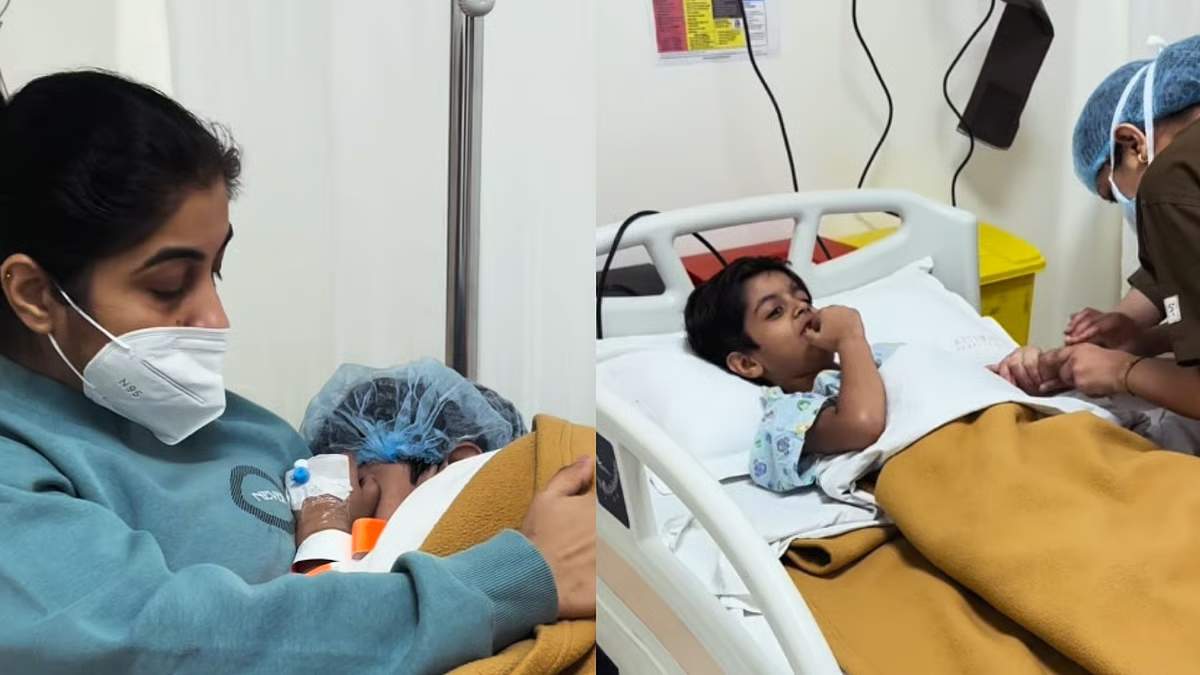
Paediatricians across Delhi-NCR are witnessing an alarming surge in children presenting with severe allergy-related ailments that increasingly require surgical intervention and long-term steroid use. The smallest lungs are now carrying the heaviest burden as prolonged exposure to toxic air transforms routine allergies into chronic, life-altering conditions.
When Allergies Turn Surgical
A five-year-old from Shalimar Bagh in northwest Delhi, who had been stable on medication for adenotonsillar hypertrophy, recently returned to his ENT specialist with mouth breathing, nasal blockage, and loud snoring. An evaluation revealed a relapse and further enlargement of adenoids caused by chronic mucosal irritation from prolonged pollution exposure, making surgical intervention necessary. Another family shared how their five-year-old required tonsil surgery after developing chronic, pollution-linked complications since moving to Delhi.
These are not isolated incidents. A 13-year-old boy who moved from Singapore with no history of breathing or airway problems developed adenoid hypertrophy soon after arriving in Delhi-NCR, while another family reported their child’s chronic cough—unrelenting for months in India—disappeared completely within weeks of moving abroad. These cases demonstrate how powerfully pollution is reshaping children’s respiratory health and forcing doctors to resort to invasive procedures that would have been avoidable in cleaner environments.
The Steroid Trap and Allergy Epidemic
Delhi’s children are experiencing asthma and allergy symptoms at rates significantly higher than those in cleaner Indian cities. A comprehensive study of over 3,000 school children found that in Delhi, 52.8 percent reported sneezing, 44.9 percent had itchy and watery eyes, 38.4 percent experienced significant cough, 33 percent developed itchy rash, 31.5 percent suffered shortness of breath, and 11.2 percent reported chest tightness. By contrast, in Kottayam and Mysuru—cities with relatively cleaner air—only 39.3 percent of children reported sneezing and 28.8 percent had itchy and watery eyes.
Despite 29.3 percent of Delhi children showing airflow obstruction or asthma on spirometry tests, only 12 percent had been diagnosed with asthma and a mere three percent were using inhalers. This massive treatment gap means countless children are suffering without proper management, often relying on repeated courses of oral steroids that carry their own risks when used chronically, including growth suppression, immune system weakening, and bone density loss.
Pollution Creates New Patients Daily
The situation has deteriorated so dramatically that doctors describe Delhi-NCR as a “gas chamber” for children’s developing immune systems. An 11-year-old football player in Raj Nagar Extension, previously full of energy, came home breathless after just minutes outside when November’s smog settled in. His doctor confirmed it wasn’t an infection—it was pollution irritating his airways, proving that simply breathing the outdoor air is now harming children who had no prior respiratory issues.
During the worst pollution weeks from late October through November, cases typically seen only in adults have begun appearing in teenagers, including pulmonary embolism—a potentially fatal condition where blood clots block lung arteries. The study comparing Delhi with southern cities also revealed that Delhi children who are overweight or obese have a 38 percent higher chance of spirometrically-defined airflow obstruction compared to their counterparts in cleaner cities, showing how pollution compounds other health vulnerabilities.
A Generation at Risk
What makes this crisis particularly insidious is that children already have developing immune systems that are vulnerable to environmental toxins. Cases of severe respiratory distress that had almost disappeared during COVID-19 lockdowns—when air quality temporarily improved—are now rising rapidly again as pollution returns to hazardous levels. For many families, the effects of bad air are fundamentally altering the routines of childhood, forcing parents to choose between letting their children play outdoors and protecting their lungs from irreversible damage.
