



🌅 Daily Morning Habits to Protect Your Lungs in Polluted Cities

By Oxygen4India | November 2025
If you live in a big Indian city — like Delhi, Gurugram, or Mumbai — stepping outside in the morning can often mean inhaling smog instead of fresh air. The early hours, once considered the healthiest time to breathe, now carry invisible pollutants that can harm your lungs, lower your immunity, and leave you tired before your day even begins.
But here’s the good news — your lungs are incredibly adaptable. With the right morning habits, you can strengthen them, improve oxygen intake, and protect yourself from pollution-related damage.
This guide will show you simple, science-backed steps to start your day in a way that supports cleaner breathing and stronger lung health — even in the most polluted cities.
🕕 1. Check the Air Quality Index (AQI) Before Stepping Out
Before opening your windows or going for a jog, always check your city’s AQI (Air Quality Index).
Apps like SAFAR, Plume Labs, or IQAir can show real-time air quality levels.
- Good (0–50): Safe for outdoor walks or yoga.
- Moderate (51–150): Limit outdoor exercise to 15–20 minutes.
- Poor (150–300+): Avoid outdoor workouts; use indoor alternatives.
👉 Pro tip: Mornings (5–8 a.m.) often have the highest pollution concentration due to temperature inversion. Wait until 9 or 10 a.m. before opening windows for ventilation.
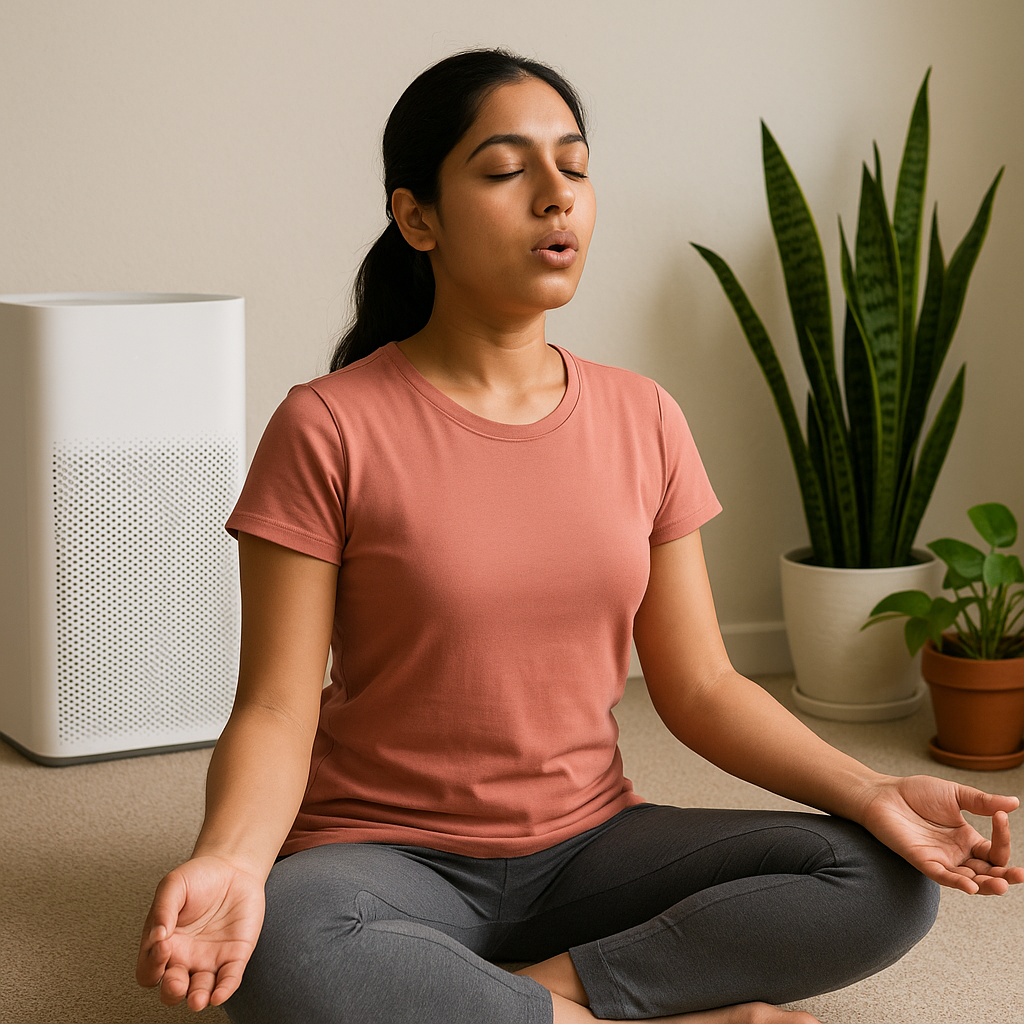
🌬️ 2. Begin Your Day with Deep Breathing Indoors
Air pollution reduces lung elasticity and oxygen efficiency. Practicing controlled breathing exercises indoors strengthens your respiratory system and improves oxygen circulation.
Here are three simple exercises:
- 🫁 Anulom Vilom (Alternate Nostril Breathing): Balances oxygen flow between both lungs.
- 🌿 Bhastrika (Bellows Breath): Expels trapped pollutants and increases lung capacity.
- 💨 Kapalabhati (Cleansing Breath): Detoxifies lungs by flushing out carbon dioxide.
Spend 10–15 minutes on these exercises in a well-ventilated room or near an air purifier.
🍋 3. Drink a Warm Detox Beverage
Start your morning with a lung-cleansing drink. Hydration helps your body flush out toxins that accumulate overnight due to pollution exposure.
Try one of these:
- Lemon + Honey + Warm Water: Balances pH and clears mucus buildup.
- Turmeric + Ginger Tea: Reduces inflammation in airways.
- Tulsi + Mulethi Infusion: Soothes throat irritation and boosts immunity.
This small ritual keeps your respiratory tract hydrated and supports healthy oxygen exchange.
🧘 4. Do Gentle Indoor Exercises
When air quality is poor, avoid outdoor runs or gym sessions near traffic-heavy areas.
Instead, opt for low-intensity exercises that promote oxygen flow indoors:
- 10 minutes of Surya Namaskar (Sun Salutation)
- 20 squats or light stretches
- 10 minutes of pranayama
Physical movement encourages deeper breathing, helping your lungs release trapped air and absorb more oxygen.
🪴 5. Clean Your Indoor Air Before You Breathe It
The air inside your home can also contain pollutants like dust, VOCs, and smoke.
Before starting your day:
- Turn on your air purifier for 30 minutes.
- Keep indoor plants like snake plant, aloe vera, or peace lily near windows.
- Avoid burning incense sticks or candles in the morning.
Pro Tip: If you or your family members have respiratory issues, consider running an oxygen concentrator for short periods daily — it ensures a steady flow of pure oxygen and reduces strain on your lungs.
🧄 6. Eat a Lung-Strengthening Breakfast
A good breakfast can help fight inflammation caused by polluted air.
Choose foods rich in:
- Vitamin C: Oranges, amla, strawberries
- Vitamin E: Nuts, seeds, and avocados
- Omega-3 Fatty Acids: Walnuts and flaxseeds
- Antioxidants: Spinach, turmeric, and green tea
Avoid fried or oily foods — they slow digestion and make it harder for your body to process oxygen efficiently.
💧 7. Stay Hydrated Throughout the Morning
Polluted air dries out your throat and nasal passages, making it easier for harmful particles to stick.
Keep a water bottle handy and sip regularly. You can also drink warm herbal teas to stay hydrated and soothe your airways.
🛏️ 8. Air Out Your Bedroom After 10 a.m.
While early morning air may be thick with smog, late morning sunlight helps dissipate pollutants.
Open your windows between 10 a.m. and 12 p.m. to let in fresh air and natural light — both of which help destroy indoor bacteria and mold.
⚙️ 9. Use an Air Quality-Optimized Routine
You can build a “pollution-safe” morning schedule:
- Wake up → Check AQI
- Do breathing exercises near an air purifier
- Drink warm detox water
- Practice light yoga indoors
- Enjoy a vitamin-rich breakfast
- Ventilate your room after 10 a.m.
This structured start ensures your lungs get the support they need every day.
💨 10. For Extra Support: Oxygen Therapy
If you or a family member experiences breathlessness, fatigue, or low SpO₂ readings (below 94%), oxygen therapy can help restore oxygen balance.
Home-use oxygen concentrators are ideal for:
- The elderly
- COPD or asthma patients
- People living in highly polluted cities
They filter nitrogen out of ambient air and deliver 95% pure oxygen, improving energy and lung function.
🌱 Final Thoughts: Breathe Smarter, Live Stronger
You might not be able to control the air outside, but you can control how your body responds to it.
Building a mindful morning routine — with clean air, hydration, gentle movement, and nutrient-rich foods — can drastically reduce the impact of pollution on your lungs.
At Oxygen4India, we believe every breath matters. From oxygen concentrators to air purifiers and health education, our goal is to help India breathe better — one clean breath at a time.
