The hospital said the next-generation radiation platform significantly cuts treatment time, reducing radiation delivery to nearly one minute per session for most cancers, while offering sub-millimetric precision to target tumours and minimise damage to surrounding healthy tissue.
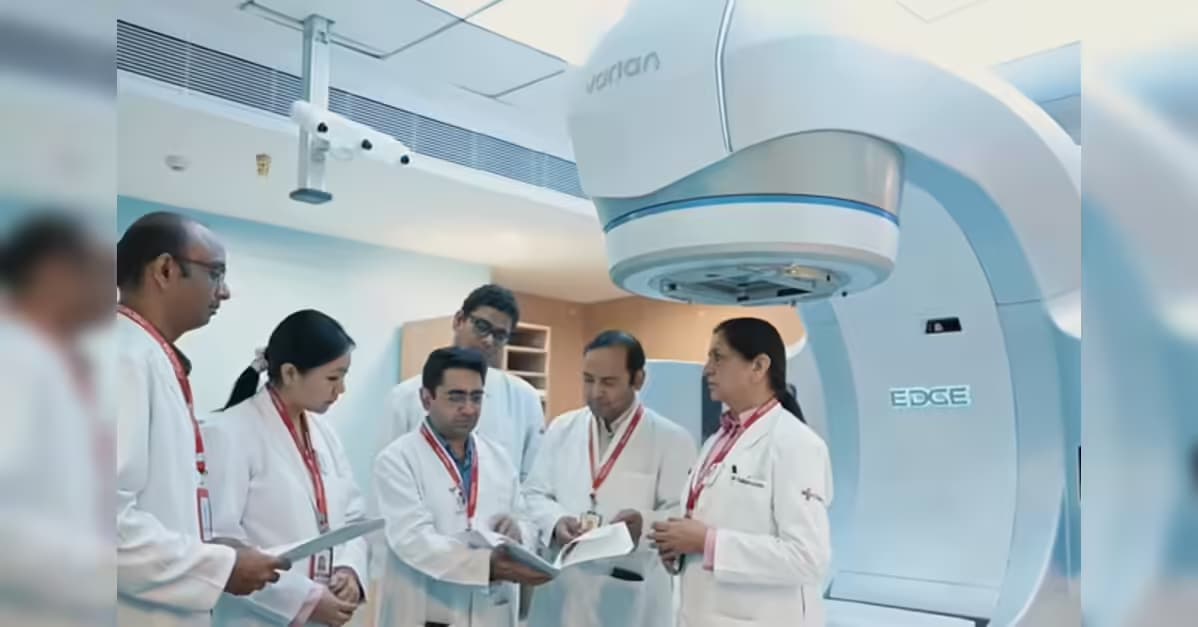
New Delhi: Medanta – The Medicity on Thursday said it has enhanced its cancer care programme with the installation of the latest Varian EDGE radiation therapy system, becoming the first hospital in India to launch a machine equipped with IDENTIFY surface-guided technology, HyperArc, RapidArc Dynamic therapy and functional stereotactic radiosurgery (SRS) cones.
The hospital said the next-generation radiation platform significantly cuts treatment time, reducing radiation delivery to nearly one minute per session for most cancers, while offering sub-millimetric precision to target tumours and minimise damage to surrounding healthy tissue.
According to Medanta, the system can be used to treat a wide range of cancers, including multiple brain metastases, head and neck cancers, breast cancer and lung cancer, as well as select benign brain conditions.
Medanta Chairman and Managing Director Dr Naresh Trehan said advanced technology plays a crucial role in the hospital’s commitment to patient-centric care. “Technology is driving a revolution in healthcare. Our decision to adopt the latest equipment reflects our ethos of ‘Har Ek Jaan Anmol’ and our commitment to delivering world-class healthcare,” he said.
Dr Tejinder Kataria, Chairperson, Radiation Oncology, Cancer Care at Medanta, said the new system enhances both clinical accuracy and patient comfort. “It allows highly precise radiation delivery, even for complex and high-risk tumours, while improving the overall patient experience,” she said.
The hospital said the integration of IDENTIFY real-time surface-guided radiation therapy enables continuous monitoring of patient positioning, automatically correcting or stopping radiation if movement is detected. This improves safety for patients across age groups and eliminates the need for thermoplastic immobilisation casts in most cases.