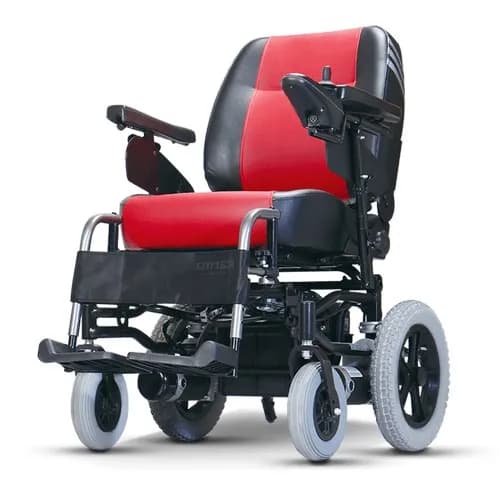
Wheelchair on Rent in Delhi Price Guide Manual Electric Stair Climbing 2025
Wheelchair on Rent in Delhi Price Guide Manual Electric Stair Climbing 2025 is a structured framework that outlines the expected monthly rental costs, security deposits, and technical specifications for securing medical mobility equipment across the Delhi National Capital Region. Navigating post-operative recovery, elderly care, or progressive respiratory illness requires immediate access to dependable mobility aids. As a primary healthcare equipment platform, Oxygen4India provides seamless access to certified medical equipment rentals, including oxygen concentrators, sleep care devices, and manual or motorized wheelchairs across India. Understanding the modern rental landscape allows families, caregivers, and hospitals to select cost-effective mobility solutions tailored to specific patient needs in 2025.
In Delhi NCR, rental rates for mobility equipment range from ₹1,000 per month for standard manual frames up to ₹18,000 per month for specialized motorized stair-climbing devices. When you evaluate mobility solutions for home care, key factors influencing total expenses include equipment technology tier, rental duration, refundable security deposits, and specialized doorstep delivery charges.
What is the cost of taking a wheelchair on rent in Delhi in 2025?
Taking a wheelchair on rent in Delhi in 2025 costs between ₹1,000 and ₹18,000 per month, depending heavily on whether you choose a manual, electric, or specialized stair-climbing model. Additional upfront costs typically include a refundable security deposit ranging from ₹2,000 to ₹15,000 alongside one-time logistics and delivery charges.
+-----------------------------------------------------------------------+
|                 2025 DELHI WHEELCHAIR RENTAL OVERVIEW                 |
+-----------------------------------------------------------------------+
|  Manual Wheelchairs         : ₹1,000 - ₹2,500 / month                 |
|  Electric / Motorized       : ₹4,500 - ₹9,000 / month                 |
|  Stair-Climbing Models      : ₹10,000 - ₹18,000 / month               |
|  Typical Security Deposit   : ₹2,000 - ₹15,000 (Fully Refundable)     |
|  Doorstep Logistics (Delhi) : ₹300 - ₹1,000 (One-Time)                |
+-----------------------------------------------------------------------+
When you secure mobility equipment for post-stroke rehabilitation, orthopedic recovery, or advanced pulmonary care, understanding the underlying pricing factors prevents unexpected expenses. In 2025, medical equipment rental models across Delhi NCR emphasize flexibility, offering daily rates for short-term hospital discharge transitions and discounted monthly packages for chronic care.
Primary determinants of your final rental price include:
- Equipment Tier: Basic manual folding wheelchairs feature lower monthly rates, whereas motorized units with electromagnetic brakes and heavy-duty lithium-ion batteries command premium rates.
- Rental Duration: Committing to a 3-month or 6-month contract typically reduces your effective monthly cost by 15% to 25% compared to week-to-week rentals.
- Security Deposits: Refundable deposits correlate directly with equipment value. Manual chairs require modest deposits (₹2,000–₹3,000), while motorized and stair-climbing units require ₹8,000 to ₹15,000.
- Logistics & Maintenance: Same-day delivery across South Delhi, Dwarka, Noida, or Gurgaon usually adds a one-time charge of ₹300 to ₹1,000, which includes home setup and initial usage demonstration.
What are the key rental price ranges for manual, electric, and stair-climbing wheelchairs?
The key rental price ranges span ₹1,000–₹2,500 per month for manual models, ₹4,500–₹9,000 per month for electric models, and ₹10,000–₹18,000 per month for stair-climbing wheelchairs in 2025. Deposit requirements, weight handling capacities, and ideal physical usage scenarios vary significantly across these three primary equipment tiers.
| Wheelchair Category | Monthly Rent (INR) | Security Deposit (INR) | Weight Capacity | Ideal Usage Scenario |
|---|---|---|---|---|
| Standard Manual | ₹1,000 – ₹2,500 | ₹2,000 – ₹3,000 | Up to 100 kg | Short-term rehab, indoor use, assisted pushing |
| Reclining / Commode Manual | ₹2,000 – ₹3,500 | ₹3,000 – ₹4,000 | Up to 110 kg | Post-spine surgery, bedridden patients, hygiene assistance |
| Motorized / Electric | ₹4,500 – ₹9,000 | ₹8,000 – ₹12,000 | Up to 125 kg | Independent travel, long distances, reduced upper-body strength |
| Motorized Stair-Climbing | ₹10,000 – ₹18,000 | ₹12,000 – ₹15,000 | Up to 130 kg | Multi-story non-elevator buildings, stilt-plus-three layouts |
Standard Manual Wheelchair
Renting a standard manual wheelchair costs ₹1,000 to ₹2,500 per month. Featuring high-grade chrome-plated steel or lightweight aluminum frames, these chairs weigh between 13 kg and 18 kg. They feature foldable frames for transit in basic hatchback vehicles, making them optimal when you require short-term indoor mobility assistance during fracture healing or post-surgical recovery.
Motorized / Electric Wheelchair
Motorized wheelchair rentals run between ₹4,500 and ₹9,000 per month. Equipped with 360-degree joystick controllers, dual 250W motors, and 20Ah battery packs, these units offer a travel range of 15 km to 20 km on a single charge. They provide complete physical autonomy for individuals dealing with neuromuscular conditions or advanced age, eliminating physical exertion.
Stair-Climbing Wheelchair
Specialized stair-climbing wheelchairs represent the highest technical tier, renting for ₹10,000 to ₹18,000 per month. Utilizing heavy-duty rubber continuous tracks and dual-climbing gear system controls, these devices navigate steep staircases safely. They provide an essential service for families living in Delhi's classic non-elevator apartments or stilt-plus-three builder floors.
Manual vs. Electric vs. Stair-Climbing Wheelchairs: Which rental option fits your needs?
To determine which rental option fits your needs, evaluate the patient's physical strength, home layout, transport requirements, and budget constraints. Manual chairs suit budget-conscious short-term care, electric models maximize independent outdoor navigation, and stair-climbing units solve multi-story architectural accessibility barriers without elevators.
       +-------------------------------------------------------+
       |           SELECTING THE RIGHT WHEELCHAIR TIER         |
       +-------------------------------------------------------+
                                   |
         +-------------------------+-------------------------+
         |                                                   |
 [Patient Physical Ability]                       [Home Architecture]
         |                                                   |
  +------+------+                                     +------+------+
  |             |                                     |             |
Self-Push /   Limited Upper                         Elevator /    Staircase
Attendant     Body Strength                         Ground Floor     Only
  |             |                                     |             |
  v             v                                     v             v
MANUAL       ELECTRIC                              MANUAL /       STAIR
CHAIR        CHAIR                                 ELECTRIC      CLIMBER
Evaluating terrain adaptability and caregiver capacity ensures you select the correct equipment. Manual wheelchairs demand either an attendant to push or sufficient upper-body strength from the patient to turn the drive wheels. If your care plan requires frequent trips to medical appointments outside the home, a lightweight folding manual frame fits into standard car trunks easily.
For patients suffering from severe cardiovascular ailments, muscle dystrophy, or chronic pulmonary limitations, manual propulsion causes excessive physical exertion. Motorized electric models allow you to control direction and speed effortlessly using a sensitive joystick, preserving the user's energy and independence. Electric wheelchairs require smooth pathways, ramp access, or elevator availability to move between floor levels.
Urban housing structures across Delhi NCR often present unique architectural hurdles. Many older residential colonies in areas like Karol Bagh, Lajpat Nagar, and Green Park lack elevators. In these stilt-plus-three layouts, standard chairs cannot navigate stairwells. Rented stair-climbing wheelchairs utilize motorized rubber crawler tracks that grip stair treads firmly, allowing an attendant to transport patients up and down multi-story buildings without manual lifting hazards.
How to select and inspect the right rental wheelchair for home care?
To select and inspect the right rental wheelchair for home care, systematically verify patient ergonomics, inspect mechanical safety features, confirm medical-grade sanitization, and establish doorstep service protocols. Performing a thorough physical review prior to signing your lease contract guarantees patient comfort and prevents operational failures during critical recovery periods.
Step 1: Assess patient ergonomics and seat dimensions
Begin by measuring the patient's hip width while seated to select the correct frame dimensions. Standard seat widths range from 16 inches for pediatric or slender adults to 18–22 inches for bariatric care. Ensure the weight capacity matches the user, and select high-density foam or anti-decubitus gel cushions to protect patients at risk of developing pressure sores during extended sitting periods.
Step 2: Inspect mechanical brake systems and structural integrity
Examine the physical frame for structural cracks, loose rivets, or structural rust. Test both primary handbrakes and wheel locks to ensure they grip the tires firmly when engaged. Check pneumatic or solid polyurethane tires for even tread wear. If inspecting an electric model, test joystick responsiveness, confirm smooth acceleration, and check battery charge capacity indicator lights.
+-----------------------------------------------------------------------+
|                   RENTAL EQUIPMENT INSPECTION CHECKLIST               |
+-----------------------------------------------------------------------+
| [ ] Frame Integrity    : Check for rust, cracks, or loose bolts.      |
| [ ] Seat Dimensions    : Measure width (16", 18", 20", or 22").        |
| [ ] Tire Tread & Brakes: Test manual wheel locks and rubber grip.     |
| [ ] Cushion Quality    : Inspect pressure-relief pad firmness.        |
| [ ] Battery Health     : Verify full charge cycle (Electric models).  |
| [ ] Sanitization Seal  : Ensure medical-grade chemical cleaning seal.  |
+-----------------------------------------------------------------------+
Step 3: Verify medical-grade sanitization standards
Because rental equipment transitions between multiple clinical and home environments, rigorous hygiene protocols are non-negotiable. According to the World Health Organization Guidelines on Wheelchair Provision, proper sanitation and ergonomic fitting prevent cross-contamination and secondary pressure injuries. Verify that your rental provider uses non-corrosive, medical-grade disinfectant sprays across all upholstery, armrests, push handles, and joystick controllers before delivery.
Step 4: Confirm doorstep delivery logistics and trial run terms
Coordinate with your supplier to ensure the wheelchair is delivered directly to your home address in Delhi NCR. Require the delivery technician to conduct an on-site trial run. This step ensures the chair fits through your home doorways, bathroom entrances, and elevator doors while allowing your caregiver to practice operating the folding mechanisms, footrests, and charging interfaces under supervision.
How do patient mobility requirements intersect with home respiratory care?
Patient mobility requirements intersect directly with home respiratory care when individuals managing respiratory distress require wheelchair support to maintain mobility without exceeding physiological exertion limits. Combining oxygen delivery devices with tailored wheelchair frames preserves energy, stabilizes oxygen saturation, and maintains safe independence during daily home care routines.
+-----------------------------------------------------------------------+
|             INTEGRATED RESPIRATORY & MOBILITY SYSTEM                  |
+-----------------------------------------------------------------------+
|                                                                       |
|   +-------------------+                     +---------------------+   |
|   | Portable Oxygen   |                     | Wheelchair Frame    |   |
|   | Concentrator /    |===[Mounting Bracket]==>| (Manual / Electric) |   |
|   | Cylinder Unit     |                     |                     |   |
|   +-------------------+                     +---------------------+   |
|             |                                          |              |
|             +-------------------+----------------------+              |
|                                 |                                     |
|                                 v                                     |
|                   [Maintains SpO2 Levels & Reduces                    |
|                    Cardiopulmonary Exertion]                          |
+-----------------------------------------------------------------------+
Patients managing advanced Chronic Obstructive Pulmonary Disease (COPD), idiopathic pulmonary fibrosis, or post-COVID pulmonary complications often experience rapid oxygen desaturation upon physical exertion. According to clinical research from the American Thoracic Society, minimizing unnecessary physical strain in respiratory patients prevents dangerous spikes in dyspnea and arterial desaturation. Utilizing a wheelchair inside the home allows these individuals to move safely without straining their cardiopulmonary system.
Integrating respiratory devices onto mobility frames requires practical equipment adaptations:
- Cylinder & Concentrator Brackets: Standard wheelchairs can be equipped with posterior mounting racks designed to hold D-size or E-size medical oxygen cylinders securely.
- Power Management Integration: When using portable oxygen concentrators (POCs) or CPAP/BiPAP machines alongside motorized wheelchairs, caregivers must monitor total power demands to ensure auxiliary medical devices operate uninterrupted.
- Clear Tubing Routing: Running non-kinking oxygen tubing along the wheelchair frame prevents accidental tripping, tube pinching, or sudden disconnection during transport.
To simplify complex home care logistics, Oxygen4India offers integrated medical equipment rental packages across Delhi. By bundling stationary or portable oxygen concentrators, BiPAP systems, and specialized wheelchairs into a single rental arrangement, families receive coordinated equipment setup, streamlined delivery, and continuous technical support from a single reliable source.
What should you check in a rental agreement before paying a deposit?
Before paying a deposit, check the exact security deposit refund terms, breakdown replacement guarantees, minimum lease duration rules, and wear-and-tear clauses in the rental contract. Ensuring transparent terms protects your finances and guarantees rapid technical support if the equipment requires servicing.
+-----------------------------------------------------------------------+
|                 CRITICAL RENTAL AGREEMENT CLAUSES                     |
+-----------------------------------------------------------------------+
|  1. Deposit Refund Term : Must detail 3-7 business day turnaround.    |
|  2. Maintenance Clause  : Vendor covers motor/battery failures.       |
|  3. Breakdown Support   : Guaranteed replacement within 24-48 hours.  |
|  4. Minimum Lease Term  : Clear monthly or daily extension rates.     |
+-----------------------------------------------------------------------+
Reviewing contractual fine print prevents disputes when returning equipment. Ensure the contract explicitly lists the initial physical condition of the wheelchair, noting any pre-existing cosmetic scratches or frame scuffs.
Essential clauses to verify include:
- Security Deposit Refund Timelines: The agreement must state the precise timeframe for returning your security deposit upon wheelchair collection. Standard industry practice across Delhi NCR provides full electronic refunds within 3 to 7 business days following equipment inspection.
- Maintenance & Technical Breakdown Guarantees: Ensure the contract specifies that normal mechanical wear-and-tear, battery degradation, or motor failures are covered by the rental vendor at no extra charge. The vendor should guarantee on-site technical repair or full unit replacement within 24 to 48 hours.
- Rental Extension and Termination Terms: Verify minimum rental commitments (typically 30 days) and check how extensions are calculated. A transparent agreement allows you to extend month-to-month at pro-rated pricing without demanding brand-new security deposits.
How to properly care for and maintain a rented wheelchair at home?
To properly care for and maintain a rented wheelchair at home, clean upholstery surfaces daily, monitor tire inflation and tread alignment, and follow strict battery charging protocols for electric models. Routine preventive upkeep ensures reliable daily performance, extends operational life, and avoids damage fees upon equipment return.
Daily Hygiene and Surface Sanitization
Wipe down artificial leather upholstery, armrests, push handles, and footplates every morning using non-corrosive disinfectant wipes or a mild soapy cloth. Avoid flooding control panels on electric models with liquid sprays. Promptly remove food debris or dust from wheel axles to prevent hair and carpet fibers from winding around axle bearings.
Battery Care Protocols for Electric Models
Maximize battery longevity in motorized wheelchairs by following structured charging routines:
- Avoid Deep Discharges: Recharge the battery pack once the charge indicator drops below 30%. Never let lead-acid or gel batteries drain to 0% capacity.
- Maintain Consistent Charging: Plug the charger directly into a stable wall outlet equipped with surge protection. Charge the pack continuously until the indicator light turns solid green (typically 6 to 8 hours).
- Storage Best Practices: If the wheelchair remains unused for several consecutive days, disconnect the main battery safety fuse and perform a full top-up charge once per week.
+-----------------------------------------------------------------------+
|               TROUBLESHOOTING & HOME MAINTENANCE GUIDE                |
+-----------------------------------------------------------------------+
| Symptom                  | Probable Cause      | Corrective Action    |
+--------------------------+---------------------+----------------------+
| Electric chair veers left| Uneven tire pressure| Inflate tires equally|
| Joystick flashes red     | Disengaged clutch   | Lock drive levers    |
| Brakes slip on slopes    | Loose cable tension | Tighten cable nut    |
| Squeaking wheel axles    | Debris accumulation | Clean axle & lubricate|
+--------------------------+---------------------+----------------------+
Basic Troubleshooting and Technical Support
If a manual chair begins pulling to one side, inspect tire inflation pressure or check for misaligned fork casters. For electric wheelchairs, if the joystick flashes error codes or refuses to drive, check whether the manual freewheel levers on the rear motors have been left disengaged. If electrical faults, battery failures, or structural frame issues persist, contact your rental provider immediately rather than attempting unauthorized mechanical repairs.
Conclusion
Choosing a wheelchair on rent in Delhi in 2025 requires balancing financial budget options—ranging from ₹1,000 per month for basic manual frames to ₹18,000 per month for specialized stair-climbing units—with the patient's physical needs and home layout. Whether you require a short-term manual chair for post-surgical rehab, a motorized wheelchair for independent outdoor travel, or an integrated respiratory support setup, matching equipment specifications to home architectural requirements ensures safe, comfortable care. Dedicated healthcare equipment platforms like Oxygen4India assist families across India by providing reliable, high-grade medical devices, flexible rental terms, and expert home delivery services.
Need personalized guidance on selecting the ideal wheelchair or integrated respiratory rental package for your home in Delhi NCR? WhatsApp an expert at Oxygen4India today for real-time inventory updates, pricing details, and instant doorstep delivery scheduling.